
There is something profoundly human in the effort to overcome language barriers.
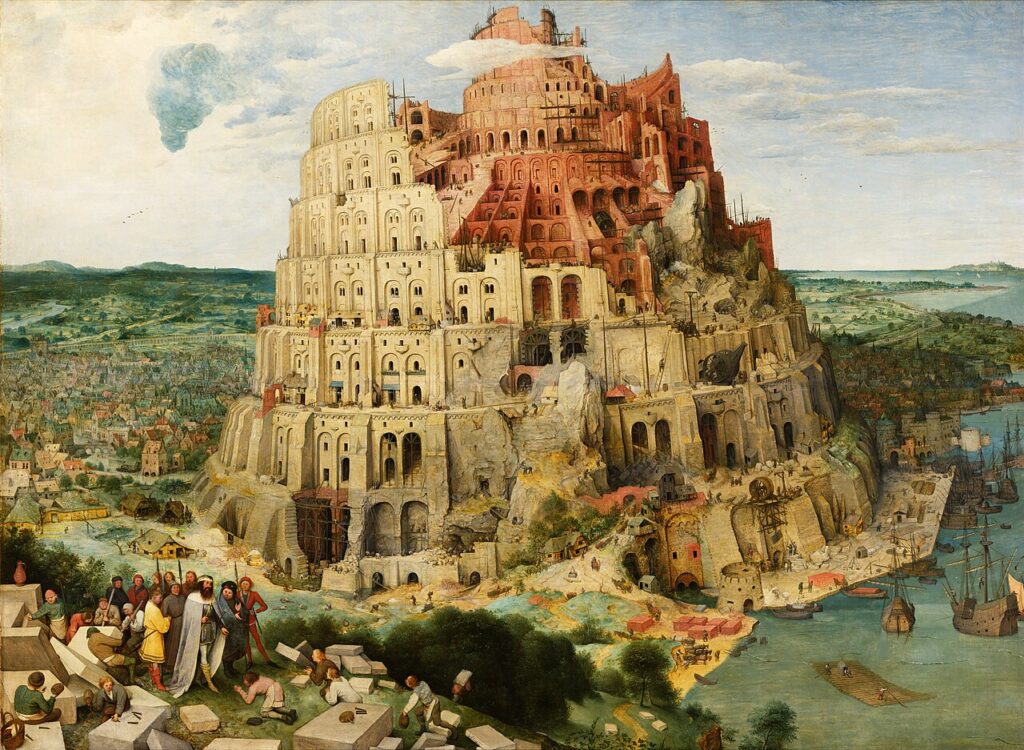
For centuries, linguistic diversity has been a source of beauty, but also a practical constraint on mutual understanding. Throughout human history, human translation and interpreting have played a crucial role in enabling the circulation of information, scientific discoveries, and ideas across languages and cultures. Over the past ten years, however, progress in AI-based translation has been extraordinary remarkable. Written content that once required time, mediation, and cost is now accessible to millions within seconds. Spoken language is following the same path.
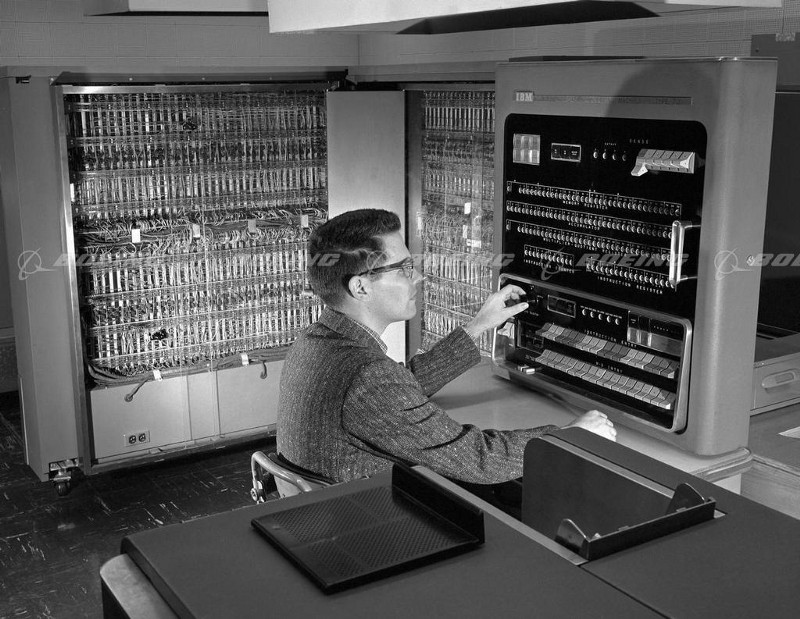
This development did not emerge overnight. It builds on decades of research conducted in laboratories and universities, and more recently on large-scale industrial efforts enabled by advances in computing power, data availability, and model scaling (see Brynjolfsson & McAfee 2014; Russell 2019). At its core, however, the motivation remains simple: to allow people to understand, and be understood, beyond linguistic boundaries. The broader implications of these advancements are significant. Easier cross-lingual access to information can support science, cultural exchange, and economic activity. When knowledge circulates more freely, innovation often accelerates and compounds (see Deutsch 2011). All in all, these developments can be seen as a welcome technological advancement.
At the same time, such progress is not entirely neutral, nor without a bitter taste. It can place at risk the very foundations of certain forms of work. Translation and interpreting, professions built on the rare ability to bridge languages, are under increasing pressure and may well transform, or even diminish, at least in their current form and scale. As technological change unfolds, markets adjust, roles evolve, and in some cases disappear. As history shows, technological transformations tend to generate both productivity gains and periods of disruption, and AI appears particularly well positioned to disrupt cognitive works, hence the professions (see Frey 2018; Susskind & Susskind 2015). Professional identity, closely tied to expertise and social recognition, can be particularly affected.
These tensions are not new. Many forms of work have been transformed or displaced by earlier waves of technology. My mother, for instance, lost her job as a typist when personal computers became widespread. Thousands did. The transition was painful. Yet, with hindsight, few would argue for a return to a world in which producing a written document required a dedicated intermediary. You simply do it yourself. The comparison is imperfect, but it illustrates a recurring pattern: technological shifts tend to redistribute expertise rather than eliminate the human dimension altogether. In other words, highly capable machines can take a skill that was once scarce and make it widely accessible, allowing many more people to use it for their own purposes, directly and without intermediary.
Seen from this perspective, further improving the quality, reliability, and accessibility of machine translation and interpreting can be understood not only as a technical challenge, but as part of a broader historical trajectory of expanding human capacity to act upon the world, here through greater mutual understanding, or at least the potential for it. The open question, therefore, is not whether this development is wrong in principle, but how to address the practical concerns it raises: governance, inclusion, and the distribution of benefits and costs across society, while also mitigating the immediate negative impacts on certain groups, particularly professionals whose work is directly affected.
We are heading toward a future of uncertainty in terms of work and skills. What seems increasingly plausible is that multilingual communication will continue to diversify: machines becoming more capable, professionals adapting and specializing, and new hybrid models emerging. The space for human expertise may change, but it is unlikely to disappear completely. It will move.
In this broader context, the ethical responsibility to continue developing highly capable translation and interpreting technologies remains. The ambition to reduce linguistic barriers, while preserving the richness of language diversity, stands among the more consequential technological developments of our time.
Selected Readings
Brynjolfsson, Erik, and Andrew McAfee. The Second Machine Age: Work, Progress, and Prosperity in a Time of Brilliant Technologies. New York: W. W. Norton & Company, 2014.
Russell, Stuart. Human Compatible: Artificial Intelligence and the Problem of Control. New York: Viking, 2019.
Deutsch, David. The Beginning of Infinity: Explanations That Transform the World. New York: Viking, 2011.
Frey, Carl Benedikt. The Technology Trap: Capital, Labor, and Power in the Age of Automation. Princeton: Princeton University Press, 2018.
Susskind, Richard, and Daniel Susskind. The Future of the Professions: How Technology Will Transform the Work of Human Experts. Oxford: Oxford University Press, 2015.